The Sixth Annual Survey, Released May 19, 2026 on Whole-Body Health
Most people will tell you the mouth belongs to the rest of the body. Acting like it does is harder. That gap is the real story in Delta Dental’s 2026 State of America’s Oral Health and Wellness Report. What does the report say about oral health and whole-body health?
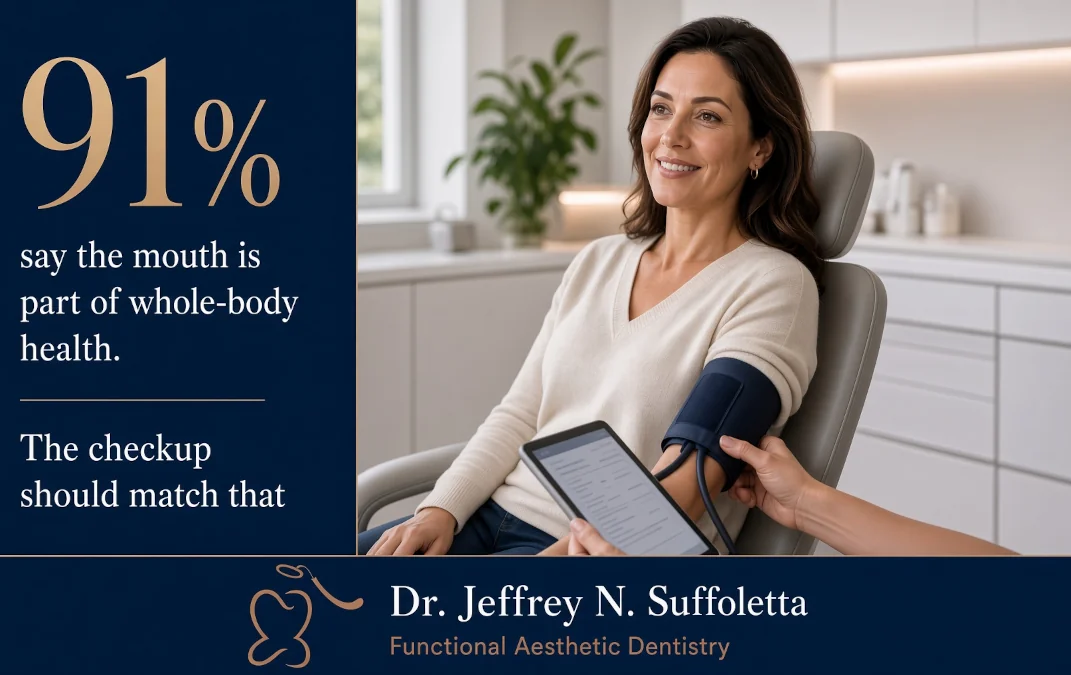
The sixth annual survey released May 19, 2026 on whole-body health, asked 1,000 U.S. adults and 1,000 parents of children 12 and under about what they believe, what they do at the sink, and whether they actually see a dentist. A third-party firm, Material Holdings, fielded the online questionnaires between January 5 and January 15, 2026. The margin of error is plus or minus 3 percentage points. The headline number is simple: 91% of adults say oral health is very or extremely important to overall health.
James W. Hutchison, president and CEO of the Delta Dental Plans Association, put it this way, oral health is playing a larger role in how adults define well-being, and younger adults are adding momentum. Belief, though, is cheap. A checkup is a calendar entry.
What people now say they understand about whole-body health
Nine in ten adults also say a preventive dental exam is as important as an annual physical—90%, up from 87% a year earlier. Seventy-one percent say oral health is essential to mental well-being. Sixty-four percent treat their teeth and gums as a source of personal pride.
Awareness of specific disease links is rising from a low base. In 2026, 32% of adults connected oral health with diabetes (27% in 2025). 28% named kidney disease (22% the year before). 25% named dementia (20%). 27% named chronic lung disease (23%). Those are still minority figures. They are also moving in one direction.
That matters because the science behind the slogan is not “a cavity causes a heart attack.” Periodontal disease is a long-running inflammatory load. The mouth can seed bacteria into the bloodstream. People with diabetes often have a harder time controlling gum infection, and gum infection can make blood sugar harder to manage. Pregnancy changes gums. Some medications dry the mouth and raise cavity risk. Dentists are not a substitute for an internist. They are often the clinician who sees bleeding gums, loose teeth, and unexplained dry mouth four times a year.
Gen Z is not the generation that “doesn’t care about teeth”
If you still picture Gen Z as the cohort that skips the dentist and lives on energy drinks, the 2026 numbers do not help that caricature.
94% of Gen Z adults say oral health is very or extremely important to overall health or whole-body health, up from 89% in 2025. 89% say dental visits are as essential as physicals, up from 75%. 81% tie oral health to mental health, up from 73%. Self-rated oral health jumped as well: 48% now rate their own mouth positively, versus 31% a year earlier.
Their awareness of chronic-disease links moved even faster. In the full report, Gen Z recognition of a link to kidney disease rose from 23% to 40%, diabetes from 28% to 43%, and dementia from 20% to 37%. Those are among the largest year-over-year swings in the document. The generation that grew up with wellness apps is applying the same logic to gums.
Belief still outruns coverage. Among uninsured Gen Z adults, 52% said they planned to enroll in dental insurance in the next year, the highest intent of any generation in the report. Intent is not a card in a wallet. It is a signal that the old story—“young adults do not value dentistry”—is getting dated.
Parents say the right words. Fewer know the first-visit rule.
95% of parents call their child’s oral health a top priority. In 2026, 78% rated that child’s oral health good or excellent, the highest mark in five years of this survey. Parent-reported habits improved too: 75% said their child brushes twice a day (67% in 2025), 64% said the child flosses daily (50%), and 60% reported daily mouthwash (46%).
Peace of mind is high. Knowledge of the actual guideline is not. 85% of parents say an early dental visit provides peace of mind, but only 27% knew the recommended first visit: within six months of the first tooth, or by age 1. Sixty-seven percent worry dental problems will hurt a child’s confidence, up from 61%. More than half of parents still struggle to get a child to brush regularly. Rewards, characters, and “the dentist said you did great” stickers are doing a lot of the work.
The checkup is still missing for too many people
In 2025, only 57% of adults said they visited a dentist. Among those who went, 89% of visits were preventive, up from 84% the year before. That is the encouraging half: when people go, they are more often going for a cleaning and an exam, not a crisis.
Insurance is the blunt instrument. 65% of insured adults made a preventive visit, versus 32% without coverage. Eighty-two percent of adults called dental insurance essential to protecting oral and overall health. The report’s median claimed savings were $350 for an individual and $1,000 for a family of four—figures that come from a benefits company, and should be read that way, but the utilization split is hard to argue with.
Geography still decides who gets in the chair. Urban adults were more likely than rural adults to report a dentist visit (59% vs. 44%) and a preventive visit (53% vs. 40%). That is not a motivation problem. It is dentists, hours, and miles.
Is anxiety a checkup problem?
Anxiety is easing but not gone. About 20% of adults report some dental anxiety. Fear of discomfort fell from 59% to 50%. Bad past experiences fell from 48% to 39%. What people say they want from the office is ordinary: shorter waits, less paperwork, headphones, something on a screen. The high-tech future of dentistry will not matter if the waiting room still feels like a holding cell.
At home, the routines are uneven. 72% of adults brush twice a day, slightly down from 74%. 73% say they floss daily. Only 55% replace a toothbrush on the recommended three-month cycle. The rest wait until the bristles look tired or they forget. The 91% consensus does not automatically produce a new brush.
Pregnancy is another place belief and practice split. 53% of adults say oral health is essential to prenatal care. Among women who have been pregnant, 35% say pregnancy raises the risk of gum disease, and 31% recognize gum disease can contribute to adverse pregnancy outcomes, up from 26%. Those numbers should be higher. Gums often bleed more in pregnancy. Needed dental treatment is appropriate. Waiting until after delivery because “the dentist might hurt the baby” is an old myth that still costs people cleanings.
What a whole-body checkup actually includes
If the mouth is part of whole-body health, the visit has to look like more than polish and a goodie bag. A serious preventive exam includes a medical history, a gum measurement or at least a bleeding check, cancer screening of the soft tissues, a look at dry mouth and medications, and X-rays when they are due—not when they are a reflex. If you have diabetes, heart disease, kidney disease, or you are pregnant, say so before the chair tips back. If your gums bleed every time you floss, that is data, not a personality flaw.
Dentists should not oversell the connection; they should not undersell it either. A cleaning will not treat dementia. Ignoring bleeding gums for a decade is not a small lifestyle choice. The Delta Dental report is an opinion survey, not a clinical trial. What it captures is permission. Patients are already nodding when someone says the mouth counts. The useful next sentence is a date and a plan.
Let’s rate your own oral health
Rate your own oral health the way the survey asked, good or not. If you are in the 60% of adults who will not call it good or excellent, the 91% statistic is not about you yet. It becomes about you when the exam happens, the pockets are measured, and the home routine matches the speech you would give a child.
The checkup should match the belief. Book it like a physical. Tell the office what your physician already knows. Bring the child before the first birthday, not after the first cavity. That is what “whole-body health” looks like when it leaves the press release and lands on a Tuesday morning.
Related Article:
- Why the ADA is Calling Out Dental Insurance
- Why We’re Doubling Down on New Oral Cancer Standards
- Do You Really Need a Whole-Body Dentist?
- Sleep-Focused Dentistry
We look forward to seeing you at your next visit! If you need to schedule an appointment or have a question, give us a call today.