Why everyone is talking about it and how it changes your energy.
Have you ever woken up after a full eight hours of sleep only to feel like you barely closed your eyes? You reach for a second cup of coffee before the first one is even gone, wondering why your energy levels are constantly hitting a wall. You might have tried changing your mattress, cutting out late-night snacks, or using a sleep tracker, but the answer might not be in your bedroom, it might be in your mouth.
Lately, there has been a significant shift in the world of dental health. We are moving away from looking at teeth as isolated objects and starting to see them as part of a much larger system, your airway. This is what we call sleep-focused dentistry. It is one of the most talked-about topics in health today because it connects the dots between your dental structure, your breathing, and your daily vitality.
At Functional Aesthetic Dentistry, we believe that a beautiful smile should be built on a foundation of total body health. When we address how you breathe while you sleep, we aren’t just protecting your teeth; we are helping you reclaim your energy.
The Unseen Link Between Your Smile and Your Sleep
It might seem strange to visit a dentist to talk about being tired. Traditionally, we go to the dentist to fix a cavity or get a cleaning. However, the mouth is the gateway to the airway. If the gateway is narrow, crowded, or blocked, your body has to work much harder to get the oxygen it needs.
Many people suffer from what is known as “fragmented sleep.” This happens when your breathing is partially obstructed throughout the night. Even if you don’t fully wake up, your brain “startles” itself out of deep sleep just to keep your airway open. These micro-awakenings happen hundreds of times a night, preventing you from reaching the deep, restorative stages of sleep that your brain and body require to function.
As a result, you wake up feeling drained. This isn’t just a lack of rest; it is a physiological struggle that takes place every single night. Sleep-focused dentistry looks at the physical structures in your mouth: like your jaw, your palate, and your tongue: to see if they are the reason, you can’t catch your breath.
Anatomy Matters, Narrow Arches and Tongue Space
One of the primary things we look for in sleep-focused dentistry is the shape of the dental arch. Think of your upper jaw as the floor of your nasal cavity. If your arch is narrow or V-shaped rather than a wide U-shape, it often means the nasal passage above it is also restricted.
Furthermore, a narrow arch leaves very little room for the tongue. Your tongue is a large muscle, and it needs a specific amount of space to sit comfortably against the roof of the mouth. If that space isn’t there, the tongue has nowhere to go but backward, into your throat. When you lie down to sleep, gravity pulls that tongue further back, partially or fully blocking your airway.
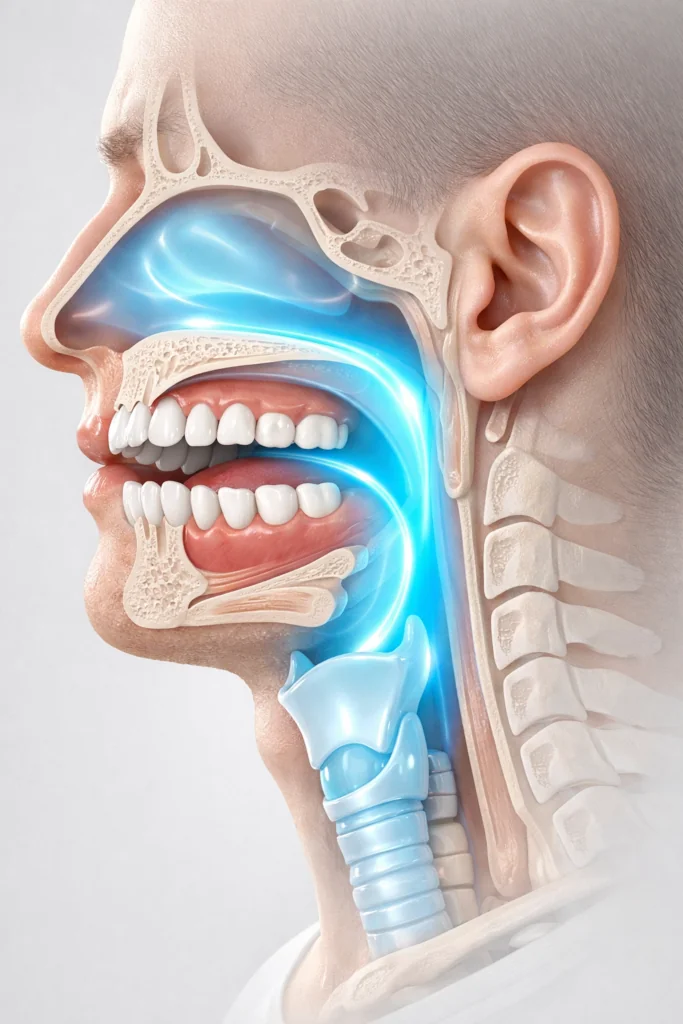
This is where orthodontic treatment plays a role beyond just straightening teeth. By widening the arches, we can create more room for the tongue and open up the airway. This structural change can have a profound impact on how easily air flows into your lungs while you sleep.
Why Do We Grind Our Teeth? The Airway Connection
For years, dentists told patients that they ground their teeth because of stress. While stress can certainly play a part, modern research suggests a much more urgent cause: survival.
When your airway begins to collapse during sleep, your brain sends a signal to your jaw muscles to clench and move forward. This movement is an attempt to open the airway and keep you breathing. This constant clenching and grinding (known as bruxism) is often a sign that someone is struggling to breathe at night.
If you wake up with a sore jaw, headaches, or teeth that look worn down and flat, it might not just be a habit. It could be your body’s way of fighting for oxygen. Instead of just wearing a plastic guard to protect the teeth, sleep-focused dentistry aims to fix the underlying breathing issue. Addressing these issues early can often prevent the need for more complex TMJ treatment later in life.
Health Meets Beauty, The Glow Up You Can’t Buy
There is a reason we call it “beauty sleep.” When you sleep deeply, your body goes into repair mode. It balances hormones, flushes out toxins from the brain, and produces collagen. When sleep is interrupted by airway issues, the physical signs show up on your face.
Common signs of poor sleep and airway issues include:
- Dark circles under the eyes that don’t go away with cream.
- A “tired” or “droopy” facial appearance.
- Mouth breathing, which can change the shape of your face over time.
- Chronic inflammation, which can lead to skin issues and premature aging.
By focusing on the functional side of dentistry, we are also enhancing the aesthetic side. When you breathe better, you sleep better. When you sleep better, your skin looks more vibrant, your eyes look brighter, and you have the natural energy to move through your day with confidence. At Functional Aesthetic Dentistry, we see this “health meets beauty” focus as the future of patient care.
How Dentistry Changes Your Energy
The most immediate benefit patients report after addressing their airway is a surge in energy. This isn’t just a “caffeine buzz” energy; it is a mental clarity and physical readiness that comes from truly resting.
When your blood oxygen levels stay consistent throughout the night, your heart doesn’t have to pump as hard, and your brain doesn’t have to stay in a state of high alert. This allows your nervous system to switch from “fight or flight” mode into “rest and digest” mode.
Improved energy leads to:
- Better Focus: No more mid-afternoon brain fog.
- Emotional Stability: Quality sleep helps you manage stress and mood much more effectively.
- Physical Performance: Whether you are at the gym or playing with your kids, your muscles and heart perform better when oxygen circulates the lungs optimally.
Beyond the Bedroom, Long-Term Health Impacts
While energy and beauty are the most noticeable changes, the long-term health benefits of sleep-focused dentistry are even more significant. Chronic sleep-disorder breathing and sleep apnea may be causes of several serious conditions, including:
- High blood pressure and heart disease.
- Type 2 diabetes.
- Depression and anxiety.
- Memory loss and cognitive decline.
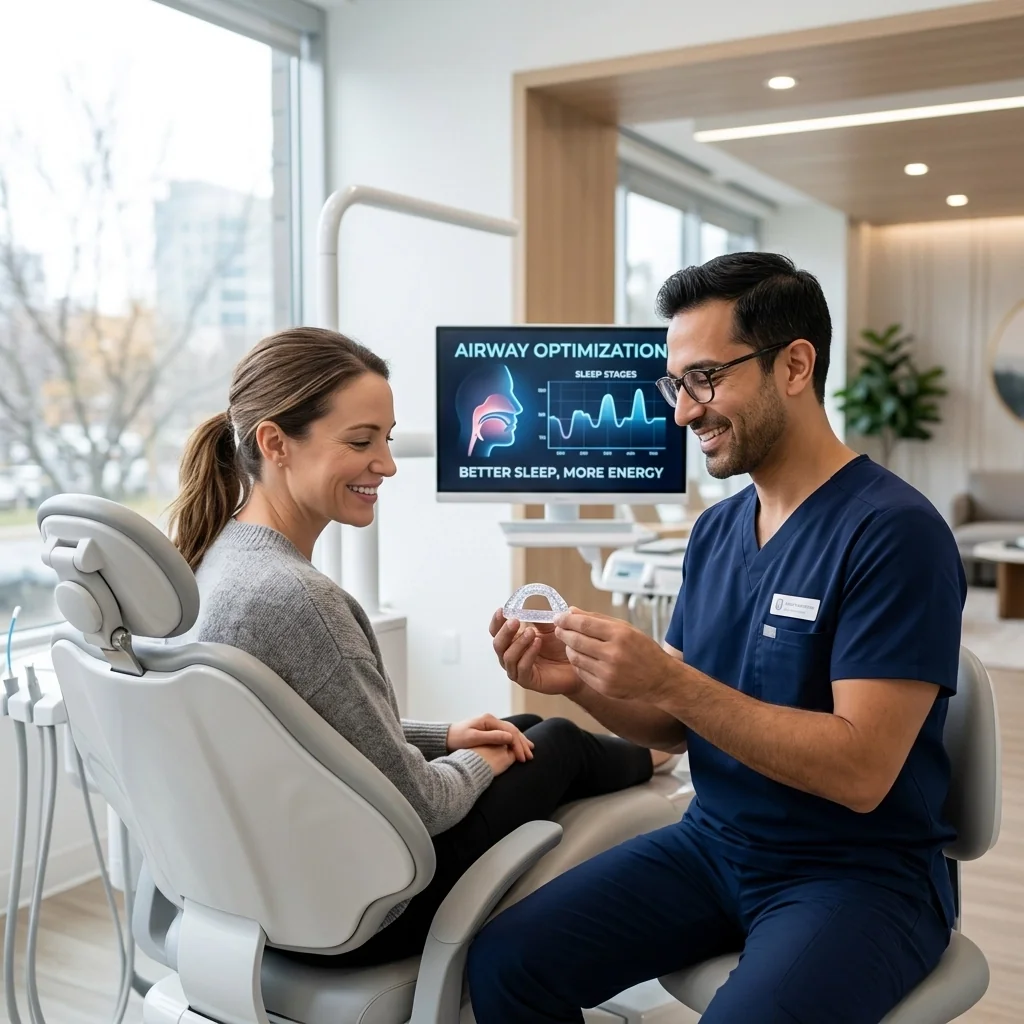
By identifying these issues through dental exams and screenings, we can intervene before these conditions become severe. Fortunately, there are many modern solutions available. For many patients, a custom-fitted oral appliance: which gently holds the jaw in a forward position to keep the airway open: can be a life-changing alternative to a bulky CPAP machine.
In some cases, specialized procedures like a laser frenectomy can help by releasing a “tongue-tie,” allowing the tongue to sit in the correct position and preventing it from falling back into the throat during sleep.
Is Sleep-Focused Dentistry Right for You?
You might be wondering if your fatigue is just a part of getting older or a busy lifestyle. However, it is always worth investigating the physical cause of your tiredness. If you snore, wake up with a dry mouth, feel chronically exhausted, or have been told to “stop breathing” in your sleep, it is time to look deeper.
At Functional Aesthetic Dentistry, we take a comprehensive approach to your care. We don’t just look at your teeth; we look at you as a whole person. During a consultation, we can evaluate your arch shape, tongue position, and signs of wear to determine if your dental health is impacting your sleep quality.
Taking care of your airway is one of the best investments you can make in your long-term health and your daily happiness. When you change the way you breathe, you change the way you live.
If you’re curious about how your dental health might be affecting your energy, we encourage you to learn more about why you should choose us for your functional and aesthetic needs. Your journey to better sleep and more energy might just start with a visit to our office.