Cosmetic and Regenerative Dentistry Trends
Smiles of the Future in 2026
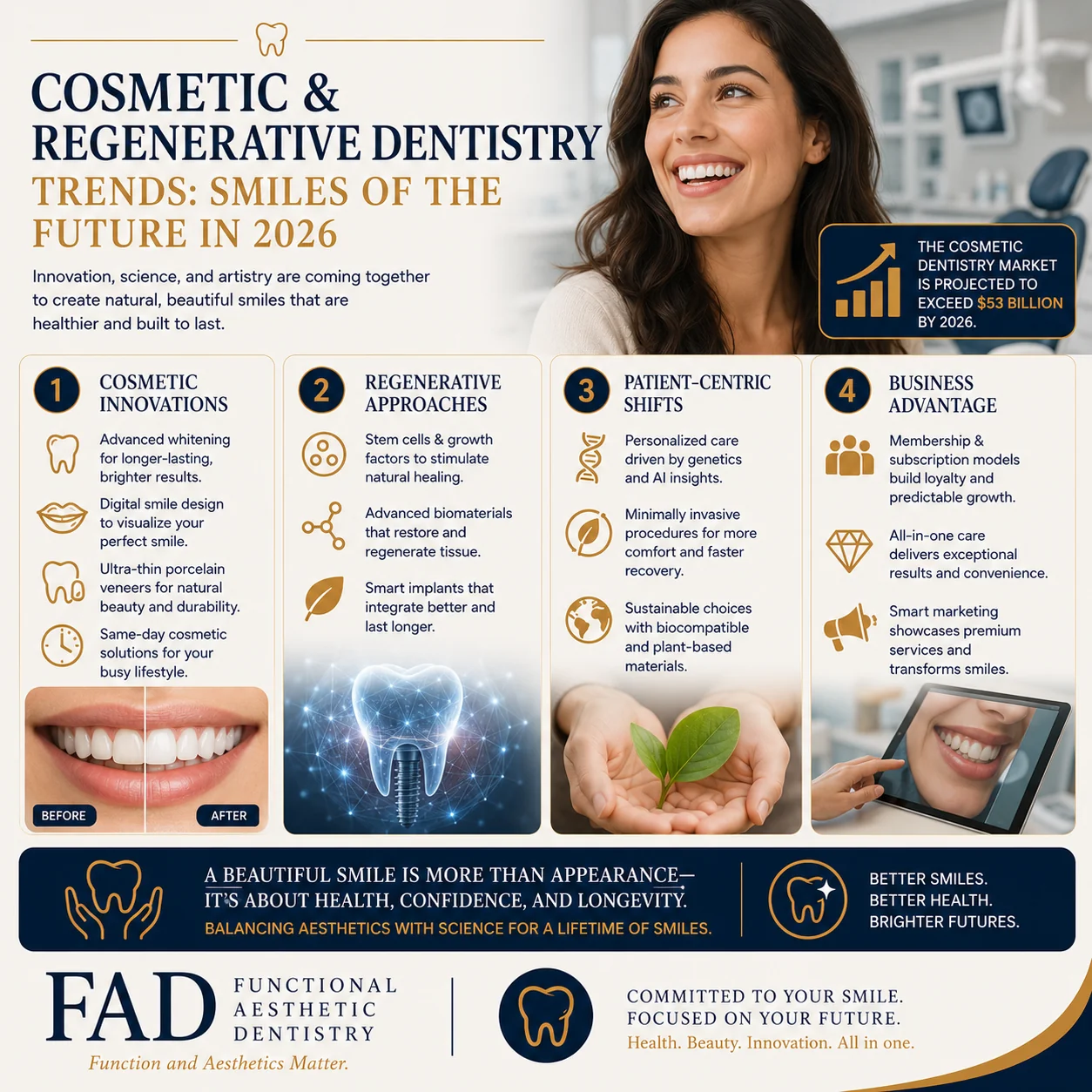
The cosmetic dentistry market is booming in 2026, with projections exceeding $5.6 billion as patients increasingly seek enhanced smiles that look and feel natural. This growth is fueled by advances in teeth whitening, porcelain veneers, and a strong consumer demand for esthetic improvements amid a broader technology boom in dentistry. Patients today want more than just functional teeth—they desire confident, youthful smiles achieved through precise, comfortable, and long-lasting treatments.
As digital tools and regenerative science converge, 2026 marks an exciting era where cosmetic enhancements blend seamlessly with biological innovation. This article explores the latest trends shaping smiles of the future, from cutting-edge cosmetic techniques to regenerative therapies that go beyond surface-level improvements.
Cosmetic Innovations
Advanced whitening techniques lead the way in cosmetic dentistry this year. Newer formulations and light-activated systems deliver faster, safer results with reduced sensitivity. In-office treatments combined with customized take-home options allow patients to achieve noticeable shade improvements in less time, often with longer-lasting effects due to improved enamel protection.
Digital smile design has revolutionized treatment planning. Using intraoral scans and specialized software, dentists create highly accurate 3D previews of proposed changes. Patients can visualize alterations to tooth shape, alignment, color, and proportions before any procedure begins. This interactive approach boosts case acceptance and ensures outcomes align with patient expectations.
Porcelain veneers remain a cornerstone of smile makeovers, with 2026 materials offering superior translucency and durability that mimic natural tooth enamel. Ultra-thin designs require minimal tooth preparation, preserving more natural structure while delivering dramatic esthetic transformations. Same-day veneer options, enabled by chairside milling and 3D printing, allow patients to walk out with their new smile in a single visit—eliminating the inconvenience of temporaries and multiple appointments.
These innovations prioritize both beauty and efficiency. Combined with improved bonding agents and color-matching technology, results are more predictable and harmonious with individual facial features.
Regenerative Approaches
While cosmetic procedures focus on appearance, regenerative dentistry addresses the underlying biology for longer-term success. Stem cell research and growth factor applications are progressing toward clinical viability, offering potential to repair or regenerate damaged tooth structures, periodontal tissues, and bone. Enamel matrix derivatives and platelet-derived growth factors are already used in periodontal regeneration, with broader applications on the horizon.
Biomimetic materials represent a major leap forward. These substances are engineered to replicate the structure and function of natural teeth, promoting remineralization and integrating seamlessly with existing tissues. They provide stronger, more resilient restorations that actively support healing rather than simply replacing lost structure.
Smart implants incorporate sensors and advanced surface treatments that enhance osseointegration and monitor health in real time. These implants can release bioactive agents to reduce inflammation or infection risk, while custom 3D-printed components ensure optimal fit and esthetics. In 2026, regenerative techniques are increasingly combined with cosmetic procedures—for example, using growth factors during implant placement or bone grafting to support esthetic zone restorations.
This biological focus ensures that beautiful smiles are also healthy and sustainable over decades.
Patient-Centric Shifts
Modern cosmetic and regenerative dentistry is highly personalized. Genetic testing helps identify individual risks for conditions like aggressive periodontal disease or caries susceptibility, allowing tailored prevention and treatment plans. AI-powered tools analyze scans, patient history, and genetic data to optimize designs and predict long-term outcomes.
Minimally invasive procedures are preferred, with techniques that preserve natural tooth structure whenever possible. Micro-preparations for veneers, conservative cavity management, and guided regenerative therapies reduce discomfort and recovery time while maintaining strength and beauty.
Sustainability is another growing priority. Plant-based and biodegradable aligner materials, along with eco-friendly restorative options, appeal to environmentally conscious patients without sacrificing performance. These materials maintain elasticity for effective tooth movement or restoration durability while reducing plastic waste.
Patients appreciate this holistic approach, which balances immediate esthetics with long-term oral and systemic health. Education during consultations emphasizes how a healthy foundation enhances cosmetic results.
Business Angle
For dental practices, these trends present strong business opportunities. Subscription-based care models—offering regular preventive visits, whitening maintenance, and priority access to cosmetic services—create recurring revenue and foster patient loyalty. All-in-one care integrates cosmetic, regenerative, and general dentistry under one roof, improving convenience and outcomes.
Marketing premium services effectively is key. Practices showcase digital smile design simulations, before-and-after galleries, and patient testimonials highlighting both esthetic and functional benefits. Emphasizing technology, sustainability, and personalized care resonates with modern consumers, particularly younger demographics and professionals seeking confidence-boosting smiles.
Investment in training and equipment for same-day procedures and regenerative techniques can differentiate a practice in competitive markets. Bundling services (e.g., whitening with veneers or implants with regenerative support) increases case value while delivering comprehensive results.
Successful approaches
The most successful approaches in 2026 balance aesthetics with health and longevity. Patients want stunning smiles, but they also demand treatments that support overall wellness and stand the test of time. By integrating cosmetic innovation with regenerative science, dentistry is delivering results that are beautiful, biological, and sustainable.
Advice for Practices: Invest strategically in digital design tools, regenerative materials, and team training. Focus marketing on patient education and real results. Consider hybrid models that combine fee-for-service cosmetic work with membership plans for ongoing care.
Advice for Patients: Seek providers who emphasize comprehensive evaluation, digital planning, and evidence-based regenerative options. Discuss long-term goals, maintenance needs, and lifestyle factors during consultations to ensure your smile investment lasts.
As technology and biology continue to advance, the smiles of the future will not only look better—they will function better and contribute to better overall health. 2026 offers an optimistic outlook for anyone seeking transformative, forward-thinking dental care.
Related Articles:
We look forward to seeing you at your next visit! If you need to schedule an appointment or have a question, give us a call today.