Why Is Everyone Talking About Fluoride Again?
What Patients Need to Know in 2026
If you’ve been paying attention to health news lately, you’ve probably noticed that fluoride is back in the headlines.
Across the country, communities are debating whether public water systems should continue adding fluoride, while health organizations, researchers, and dental professionals are weighing in on the conversation. For many patients, the discussion has created confusion and raised important questions: Is fluoride safe? Does it still matter if I brush my teeth every day? And why are dentists still talking about it after all these years?
At Functional Aesthetic Dentistry, we believe that informed patients make better decisions about their health. Let’s take a closer look at why fluoride is making news in 2026 and what it means for you and your family.
What Is Fluoride and Why Has It Been Used for Decades?
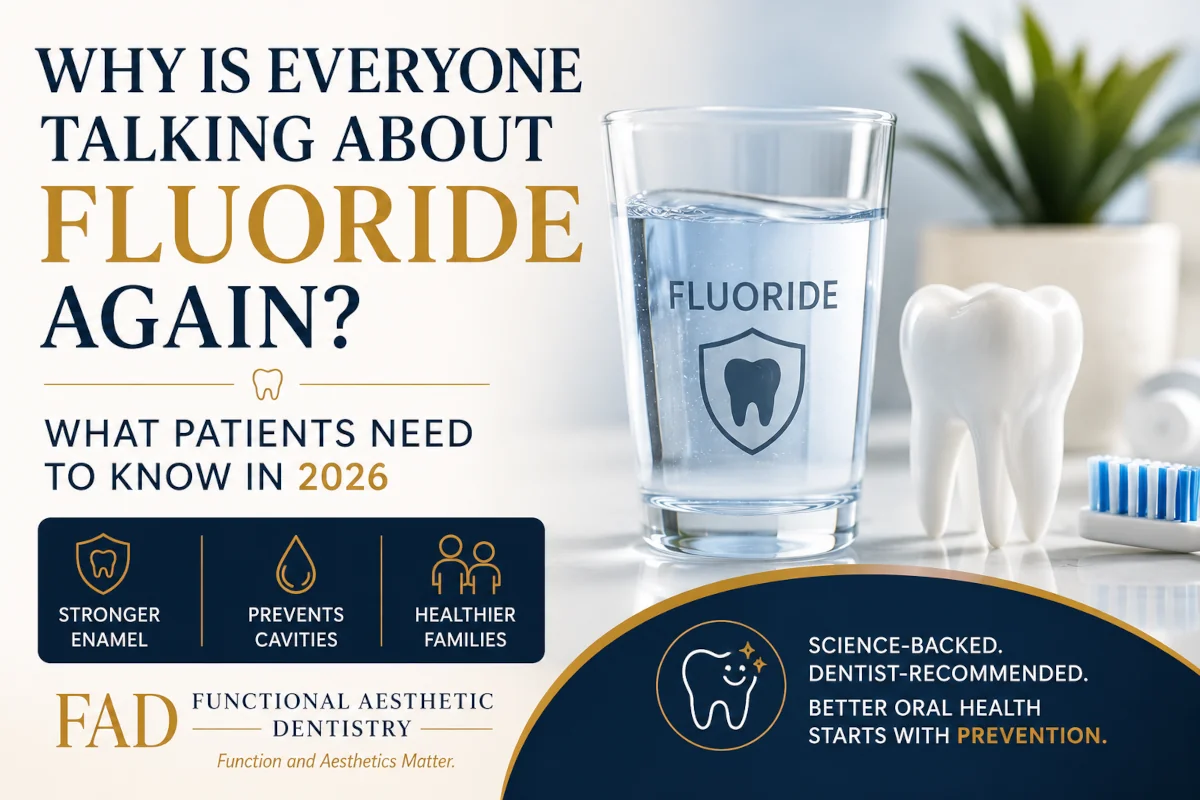
Fluoride is a naturally occurring mineral found in water, soil, and certain foods. For generations, it has been recognized as one of the most effective tools for preventing tooth decay.
When fluoride comes into contact with your teeth, it helps strengthen enamel, making it more resistant to the acids produced by bacteria in the mouth. It can also help repair very early stages of tooth decay before cavities fully develop.
Community water fluoridation began in the United States more than 75 years ago and has often been cited as one of the most successful public health initiatives in modern history. Millions of Americans have benefited from access to fluoridated drinking water, contributing to lower rates of tooth decay and improved oral health outcomes.
Why Is Fluoride Back in the News?
The renewed attention surrounding fluoride stems from recent discussions taking place in communities across the country. Some municipalities have considered reducing or eliminating fluoridation programs, while others have debated the long-term benefits and risks.
At the same time, organizations such as the American Dental Association (ADA) continue to review and publish research regarding fluoride’s effectiveness in preventing cavities and supporting oral health.
Recent studies have examined what happens when communities discontinue water fluoridation. In many cases, researchers observed increases in tooth decay rates, particularly among children and vulnerable populations who may have limited access to preventive dental care.
As a result, fluoride has once again become a major topic of discussion among healthcare professionals and policymakers.
What Happens When Communities Stop Fluoridating Water?
One of the most important questions researchers have studied is what happens after fluoridation programs end.
Several studies have found that communities that discontinue fluoridation often experience increases in cavity rates over time. This can lead to:
- More dental fillings
- Increased dental treatment costs
- Greater rates of tooth decay among children
- More emergency dental visits
- Increased oral health disparities among lower-income families
While fluoride is not a substitute for brushing, flossing, and regular dental visits, it provides an additional layer of protection that benefits entire communities.
For many families, that protection can make a meaningful difference in long-term oral health.
Is Fluoride Safe?
One of the most common questions we hear from patients is whether fluoride is safe. The answer is that fluoride has been extensively studied for decades. Major health organizations, including the ADA, continue to support the use of fluoride at recommended levels for preventing tooth decay.
Like many things in healthcare, the amount matters. Recommended fluoride levels are carefully regulated and designed to maximize benefits while minimizing potential risks. Current evidence continues to support the safety and effectiveness of fluoride when used appropriately. Of course, every patient is unique. If you have specific concerns about fluoride exposure, our team is always happy to discuss your individual situation and answer any questions you may have.
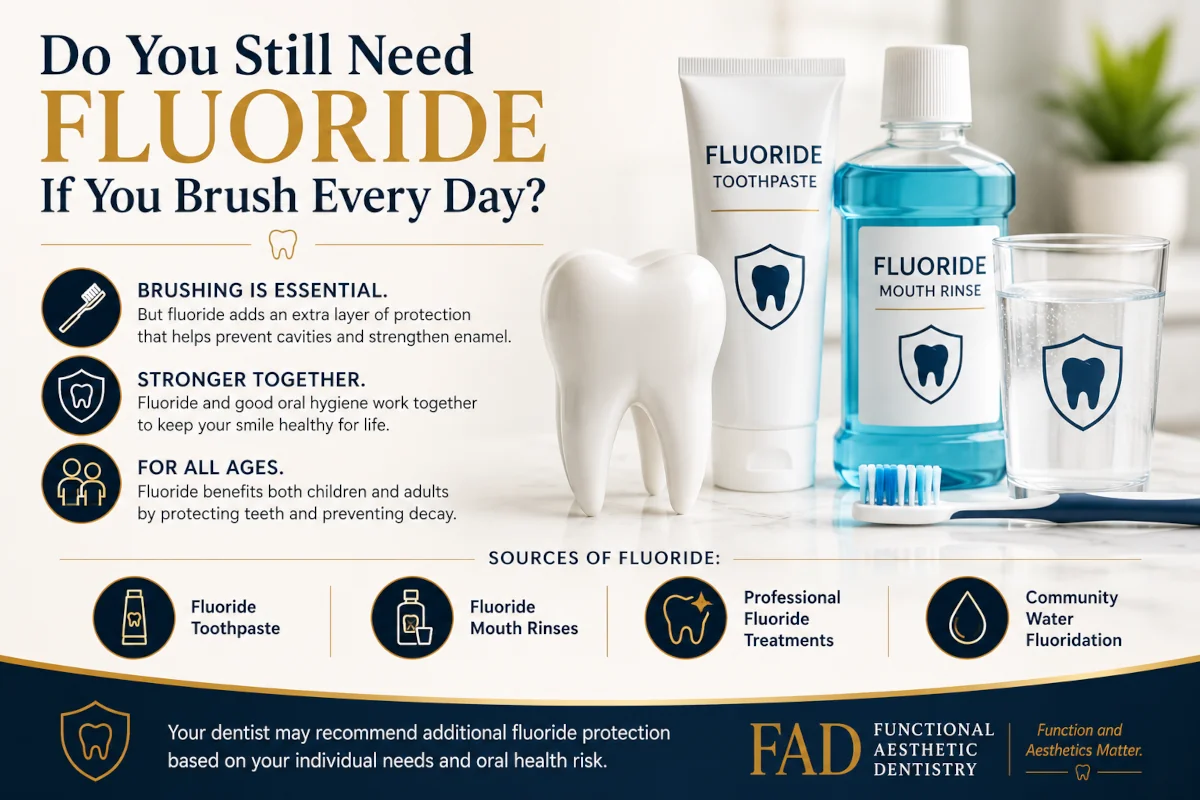
Do You Still Need Fluoride If You Brush Every Day?
Many patients assume that because they brush twice daily, fluoride is no longer important. In reality, fluoride and good oral hygiene work together. Even patients with excellent brushing habits can experience enamel wear, acidic challenges from certain foods and beverages, dry mouth, or other factors that increase cavity risk. Fluoride helps strengthen teeth throughout life and remains beneficial for both children and adults.
Sources of fluoride may include:
- Fluoride toothpaste
- Fluoride mouth rinses
- Professional fluoride treatments
- Community water fluoridation
Depending on your oral health needs, your dentist may recommend additional fluoride protection as part of your preventive care plan.
What Summerlin Families Should Know
Preventive dentistry remains one of the most cost-effective investments you can make in your health. Whether fluoride becomes a topic of debate in the news or not, the goal remains the same: preventing dental problems before they become expensive and painful.
For children, fluoride helps support healthy development and reduces the likelihood of cavities during critical growth years. For adults, fluoride can help protect against enamel erosion, root decay, and other issues that become more common with age.
Combined with routine dental examinations, professional cleanings, and healthy habits at home, fluoride continues to play an important role in maintaining strong, healthy smiles.
Our Approach to Preventive Dentistry
At Functional Aesthetic Dentistry, we believe prevention is always better than treatment.
Our team evaluates each patient’s individual risk factors and develops personalized recommendations designed to protect long-term oral health. Rather than taking a one-size-fits-all approach, we focus on what works best for your unique needs.
Preventive care may include:
- Comprehensive examinations
- Professional cleanings
- Oral cancer screenings
- Digital imaging
- Fluoride recommendations when appropriate
- Customized home-care guidance
Our goal is simple: help you maintain a healthy smile while minimizing the need for extensive dental treatment in the future.
Final Thoughts
Fluoride may be making headlines again in 2026, but its role in dentistry remains remarkably consistent.
Decades of research continue to support fluoride as an effective tool for preventing tooth decay and promoting better oral health. While public discussions and policy debates will likely continue, patients can feel confident knowing that fluoride remains one of the most studied preventive measures available.
If you have questions about fluoride, preventive dentistry, or your family’s oral health, the team at Functional Aesthetic Dentistry is here to help.
Schedule your next appointment today and discover how personalized preventive care can keep your smile healthy for years to come.
Frequently Asked Questions
- Is fluoride safe for children?
- Yes. Fluoride has been extensively studied and is considered safe for children when used at recommended levels.
- Can fluoride reverse cavities?
- Fluoride may help remineralize and repair very early stages of tooth decay before a cavity fully forms.
- Should adults still use fluoride toothpaste?
- Absolutely. Adults continue to benefit from fluoride because it helps strengthen enamel and protect against decay.
- What happens if my community stops fluoridating water?
- Research suggests that communities that discontinue fluoridation may experience higher rates of tooth decay over time.
- Are professional fluoride treatments worth it?
- For many patients, especially those at higher risk for cavities, professional fluoride treatments can provide an additional level of protection.
Related Articles:
We look forward to seeing you at your next visit! If you need to schedule an appointment or have a question, give us a call today.