The Rise of Digital and 3D Technologies
In 2026, dentistry is undergoing a profound transformation driven by digital and 3D technologies. The surge in intraoral scanners, chairside 3D printing, and seamless digital workflows is making restorations faster, more accurate, and remarkably patient-friendly. What once required multiple appointments and weeks of lab work can now often be completed in a single visit with exceptional precision. These advancements are not just incremental improvements—they are redefining the standard of care, enabling same-day dentistry while elevating clinical outcomes across general, cosmetic, and specialty practices.
As economic pressures and patient expectations rise, practices adopting these tools are gaining a competitive edge. This article explores the key innovations, patient benefits, specialized advances in orthodontics and implants, and practical considerations for implementation in the current year.
Key Innovations
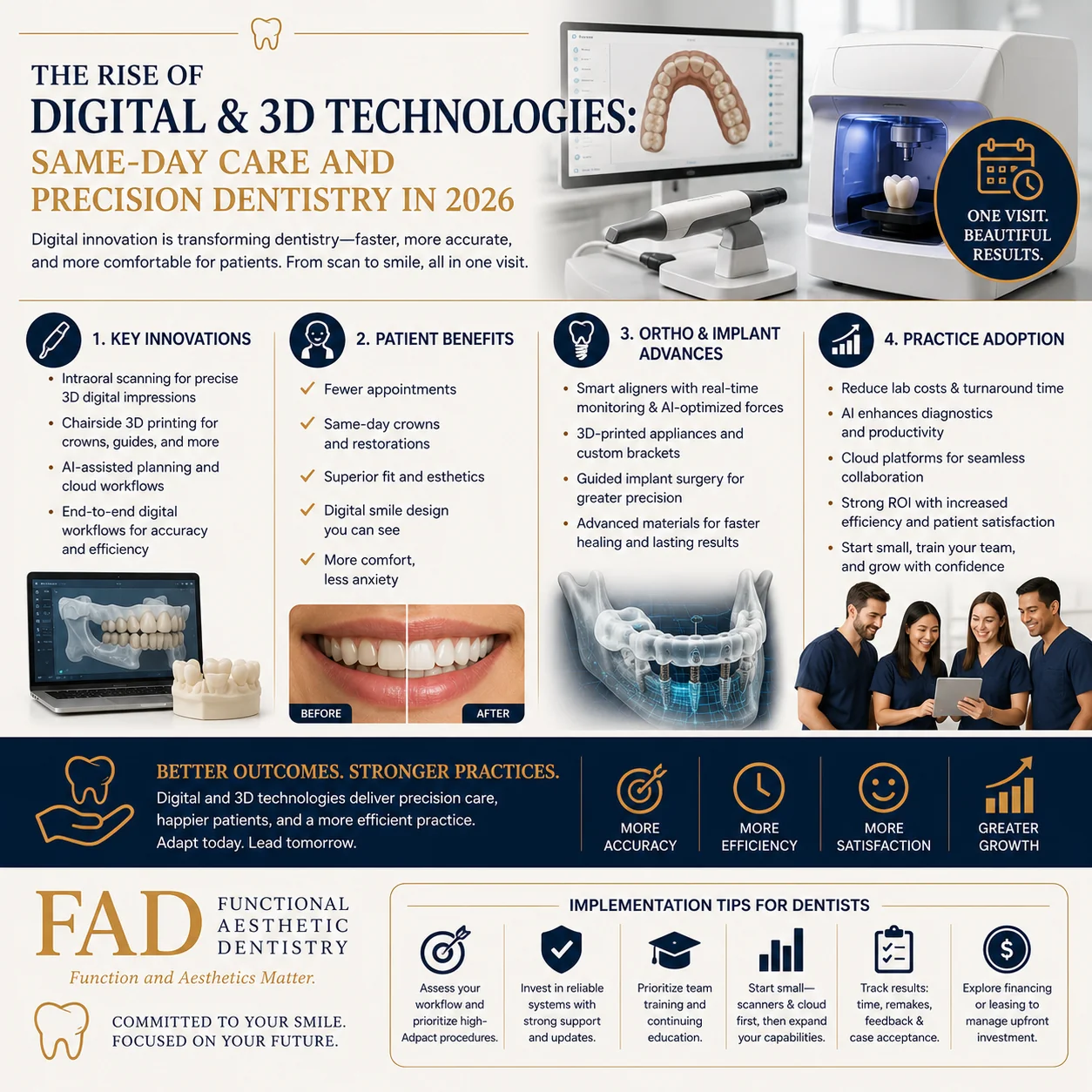
Intraoral scanning has firmly established itself as the standard of care in modern dentistry. These handheld devices capture highly detailed 3D images of the teeth and surrounding structures in minutes, replacing traditional messy impressions. In 2026, scanners boast improved accuracy, faster processing, and better integration with design software, making them indispensable for diagnostics, treatment planning, and fabrication.
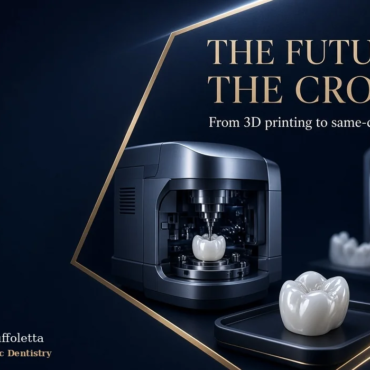
Chairside 3D printing represents another breakthrough. Practices can now design and print crowns, bridges, aligners, surgical guides, and even custom brackets directly in the office. Materials have advanced significantly, offering strength, aesthetics, and biocompatibility comparable to—or better than—lab-fabricated restorations. This in-house capability slashes turnaround times from weeks to hours.
Computer-guided implant surgery leverages 3D imaging (such as CBCT) and AI-assisted planning to create precise surgical guides. Dentists can simulate procedures virtually, determining optimal implant position, angle, and depth to avoid critical structures like nerves and sinuses. Cloud-based software ties everything together, allowing secure storage, collaboration with specialists, and real-time access to patient data across devices. These platforms often include version control and automated backups, streamlining multi-provider cases.
Together, these innovations create end-to-end digital workflows—from initial scan to final placement—that minimize errors and maximize efficiency.
Patient Benefits
Patients are the primary beneficiaries of this digital revolution. One of the most noticeable advantages is the dramatic reduction in office visits. Traditional workflows involving physical impressions, temporary restorations, and multiple fittings are being replaced by streamlined processes. Many restorations can now be completed in a single appointment, minimizing disruption to patients’ schedules.
Same-day restorations are a game-changer. Using intraoral scans and 3D printers, dentists can fabricate and seat permanent crowns or veneers during one visit. This not only improves convenience but also reduces the risk of complications associated with temporaries, such as sensitivity or dislodgement.
Fit and esthetics have reached new heights. Digital designs allow for sub-millimeter precision, resulting in restorations that integrate seamlessly with natural dentition. Patients report higher satisfaction with the look and feel of their new smiles. Digital smile design tools take this further by creating virtual previews of cosmetic outcomes. Patients can visualize proposed changes to shape, color, and alignment before any treatment begins, leading to more informed consent and realistic expectations.
Comfort is another major win. No more gagging on impression materials or enduring long provisional phases. The non-invasive nature of scanning and guided procedures often translates to less anxiety and faster recovery times. For cosmetic patients, the ability to preview and approve a new smile digitally enhances the overall experience and boosts confidence in the final result.
Ortho and Implant Advances
Orthodontics and implantology are experiencing particularly exciting developments in 2026. Biodegradable and plant-based aligner materials are gaining traction, offering a more sustainable option without compromising performance. These aligners maintain the necessary elasticity for effective tooth movement while addressing environmental concerns.
Smart sensors embedded in aligners or attached devices monitor wear time, force application, and progress in real time. Patients and providers receive data via apps, allowing for remote adjustments and fewer in-office visits—often reducing treatment duration by months. AI-optimized force systems analyze individual biomechanics to apply precise, customized forces that accelerate movement safely.
Robotic elements and advanced 3D-printed appliances, such as custom brackets and expanders, further enhance precision. In-house printing enables rapid production of these devices with accuracy down to 0.2 mm, cutting lab delays significantly. Micro-vibration technologies and accelerated protocols complement these tools, stimulating bone remodeling for faster results.
In implant dentistry, computer-guided surgery combined with 3D-printed surgical guides and custom healing abutments improves predictability. Advanced biomaterials and surface treatments promote faster osseointegration, while digital planning helps achieve ideal esthetic and functional outcomes, even in complex cases. These technologies are especially valuable for full-arch restorations and immediate-load protocols.
Practice Adoption
For dental practices, the business case for digital and 3D technologies is compelling. In-house manufacturing reduces reliance on external labs, yielding substantial cost savings on materials and shipping while improving turnaround. Practices can pass some efficiencies to patients through competitive pricing or offer premium same-day services.
Integration with AI enhances diagnostics by automatically flagging issues in scans and suggesting optimized designs. This synergy reduces chair time, increases case acceptance, and supports higher productivity. Cloud platforms facilitate team collaboration and data analytics, helping owners track key metrics like material usage and procedure efficiency.
Adoption does require upfront investment in equipment, software subscriptions, and training. However, many providers see return on investment within the first year through increased capacity and patient satisfaction. Successful practices often start with core tools like scanners and printers before expanding into guided surgery or smart ortho systems. Staff buy-in is crucial—comprehensive training programs and phased implementation help overcome the learning curve.
Improved Outcomes and Competitiveness
Digital and 3D technologies are elevating clinical outcomes by enabling more precise, minimally invasive, and predictable care. Patients experience better results with less discomfort and inconvenience, while practices gain efficiency, cost control, and differentiation in a competitive market. In 2026, these tools are no longer optional for forward-thinking offices—they are essential for long-term success amid staffing challenges and evolving patient demands.
Implementation Tips for Dentists:
- Assess your practice’s current workflow and identify high-volume procedures (e.g., crowns or aligners) that would benefit most from digitization.
- Invest in reputable systems with strong customer support and regular updates.
- Prioritize team training through manufacturer programs or continuing education courses.
- Start small with scanners and cloud storage before adding printers or guided surgery modules.
- Monitor metrics like procedure time, remake rates, and patient feedback to refine your approach.
- Consider financing options or leasing to manage initial costs.
The rise of digital and 3D dentistry represents more than technological progress—it embodies a shift toward patient-centered, efficient, and precise care. Practices that embrace these innovations today will be best positioned to thrive in the years ahead, delivering smiles that are not only beautiful but built to last with cutting-edge precision.
Related Articles:
We look forward to seeing you at your next visit! If you need to schedule an appointment or have a question, give us a call today.