Access, Policy, and Public Health
Dental Care Changes and Workforce Initiatives in 2026
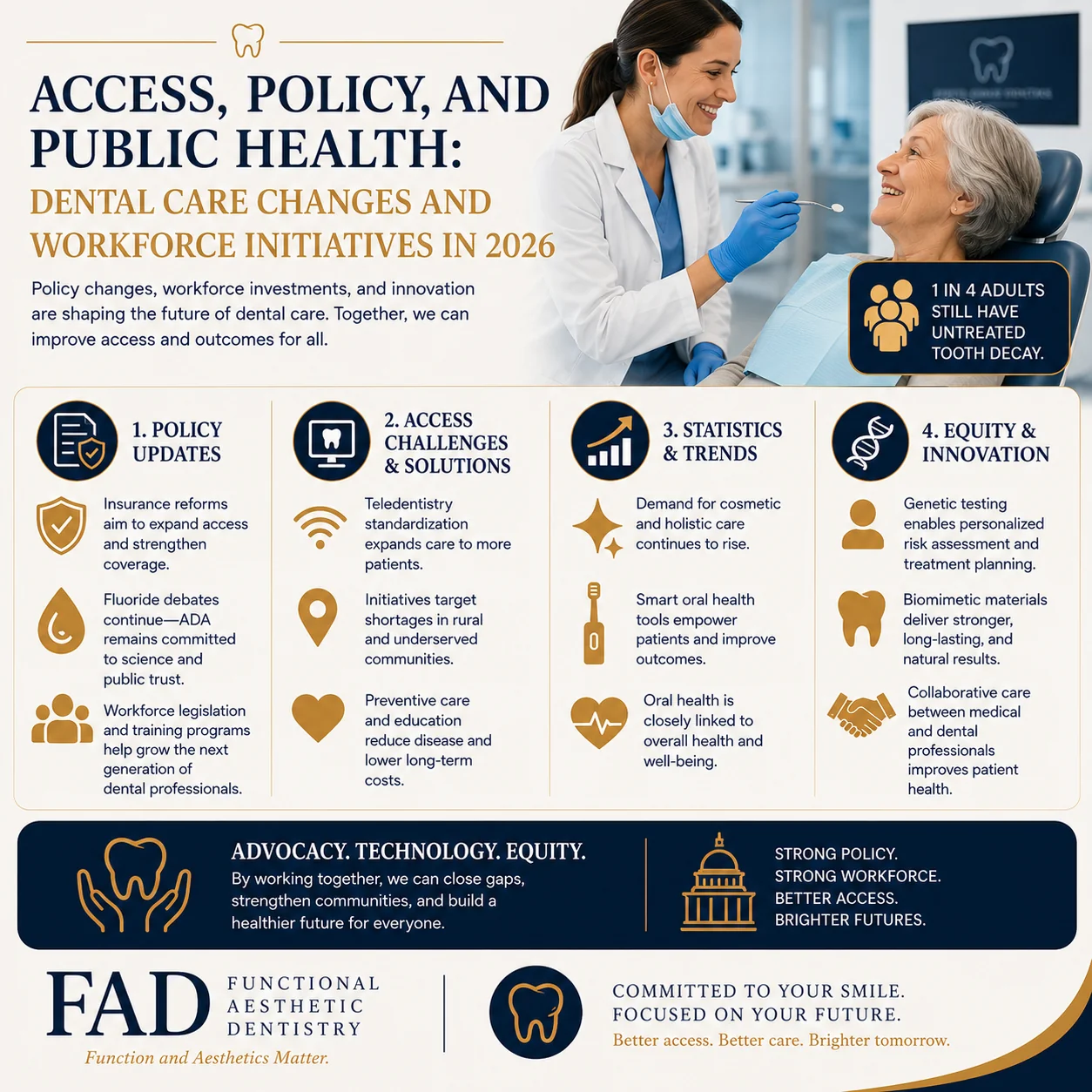
The landscape of dental care in the United States is shifting significantly in 2026, influenced by policy adjustments, workforce initiatives, and persistent public health challenges. Notable developments include the delayed implementation of Medi-Cal dental benefit changes, which were originally set to limit coverage for certain adult members (except emergencies) starting in 2026 but have now been postponed to 2027, providing temporary relief while prompting preparation. Federal funding initiatives aim to bolster the dental workforce in underserved communities, yet untreated cavities continue to affect approximately 1 in 4 adults, according to projections tied to Centers for Disease Control and Prevention (CDC) insights.
These changes occur against a backdrop of economic uncertainty, insurance pressures, and evolving patient needs. As dentistry intersects more closely with overall healthcare, stakeholders are focusing on improving access, reforming policies, and leveraging innovation to address disparities. This article examines the key developments shaping dental care access and public health this year.
Policy Updates
Insurance reforms remain a top concern for dental professionals. Many dentists are reevaluating participation in networks due to low reimbursement rates and administrative burdens. The American Dental Association (ADA) and related reports highlight insurance issues as the leading challenge for 2026, prompting practices to consider dropping plans or negotiating better terms. Dental Loss Ratio (DLR) regulations and potential changes in Medicare Advantage dental benefits are also under scrutiny, as payers seek rate increases amid higher utilization.
Fluoride debates have captured public attention, with surveys showing Americans place greater trust in the ADA than in figures like RFK Jr. for fluoride information. This reinforces the organization’s advocacy role in evidence-based public health measures while highlighting ongoing misinformation challenges in community water fluoridation and professional applications.
Workforce legislation and expansion efforts offer hope. Federal funding is supporting new programs to bring dentists to underserved areas, including loan repayment incentives and expanded training pipelines. The ADA has backed Senate bills aimed at growing the dental team through enhanced education and scope-of-practice adjustments for auxiliaries. These initiatives respond to persistent staffing shortages—reported by nearly 90% of practices—despite growing numbers of hygienist graduates. Early-career ownership trends show delayed but eventual practice ownership, with generational and gender gaps narrowing over time.
Policy discussions also encompass broader economic factors, such as tariffs and overhead costs, influencing practice viability and patient affordability.
Access Challenges and Solutions
Access to dental care remains uneven, particularly in rural and underserved urban communities. Shortages of providers, combined with transportation barriers and high costs, exacerbate untreated disease. The Medi-Cal delay offers breathing room, but long-term solutions are needed as immigration-status-based coverage limits loom.
Teledentistry has become a standardized solution, evolving from a pandemic-era tool into a routine offering. Remote consultations enable triage, follow-ups, and preventive guidance, expanding reach in areas with limited in-person options. Many states have updated regulations to support broader reimbursement for virtual care, improving continuity for patients with mobility or scheduling challenges.
Efforts to address shortages include targeted federal and state programs that place providers in high-need regions. Community health centers, mobile dental clinics, and school-based programs are expanding, supported by workforce development grants. Preventive care receives renewed emphasis, with initiatives promoting regular check-ups, sealants, and early interventions to reduce costly emergency treatments later.
Practices are adapting by offering flexible payment options, subscription models, and integrated medical-dental services. These strategies help remove financial barriers and encourage proactive care.
Statistics and Trends
Oral health statistics underscore the urgency of these efforts. Untreated cavities affecting 1 in 4 adults highlight ongoing prevention gaps despite technological advances. However, positive trends emerge in patient behavior and technology adoption.
Demand for cosmetic and holistic dentistry is rising, driven by awareness of smile aesthetics and overall wellness. Patients increasingly seek veneers, whitening, and comprehensive care that addresses not just teeth but systemic health. Smart hygiene tools—such as connected toothbrushes and oral health apps—are becoming mainstream, providing real-time feedback on brushing habits and improving daily compliance. Research links consistent use of these devices to better outcomes and reduced disease incidence.
Whole-health connections are gaining recognition. The links between periodontal disease and conditions like diabetes, cardiovascular disease, and respiratory issues are driving interdisciplinary approaches. Dentists are screening for systemic markers and collaborating with physicians, reflecting a shift toward integrated care models that treat the mouth as a window to overall health.
Economic data from the ADA’s Health Policy Institute shows fluctuating dentist confidence, with patient volume rebounding but concerns over costs persisting. Generational shifts influence trends, as younger patients prioritize convenience, technology, and preventive wellness.
Equity and Innovation
Equity in dental care is advancing through targeted innovation. Genetic testing is emerging for personalized treatment plans, assessing risks for periodontal disease, caries susceptibility, and oral cancer. This precision approach allows tailored prevention and therapy, particularly benefiting underserved populations with higher disease burdens.
Biomimetic materials—designed to mimic natural tooth structure and promote remineralization—are improving restorative outcomes with less invasive techniques. These materials support minimally invasive dentistry, preserving more natural tooth structure and extending restoration longevity.
Collaboration between medical and dental professionals is strengthening. Calls for integrated care models emphasize shared electronic records, joint training, and coordinated management of chronic conditions. Federal workforce programs and policy incentives are facilitating these partnerships, aiming to reduce overall healthcare costs through better oral health.
Innovations like AI diagnostics and 3D technologies further support equity by improving efficiency in high-volume settings and enabling remote expertise sharing.
2026 Advocacy and Technology Recap
In 2026, advocacy and technology are indispensable for advancing dental equity. Strong policy engagement—through organizations like the ADA—ensures evidence-based decisions on insurance, fluoride, and workforce issues. Meanwhile, digital tools, teledentistry, and precision innovations help bridge access gaps and elevate care quality.
The future outlook is cautiously optimistic. With sustained investment in workforce development, preventive strategies, and integrated care, the profession can make meaningful progress against untreated disease and disparities. Dentists, policymakers, and patients must collaborate to harness these changes, ensuring that high-quality dental care becomes more accessible and equitable for all Americans.
Practices and communities that prioritize prevention, embrace innovation, and support advocacy will lead the way toward a healthier oral and systemic future. The delayed Medi-Cal changes and new funding streams provide momentum—now is the time to translate policy and technology into tangible improvements in public health.
Related Articles:
We look forward to seeing you at your next visit! If you need to schedule an appointment or have a question, give us a call today.