
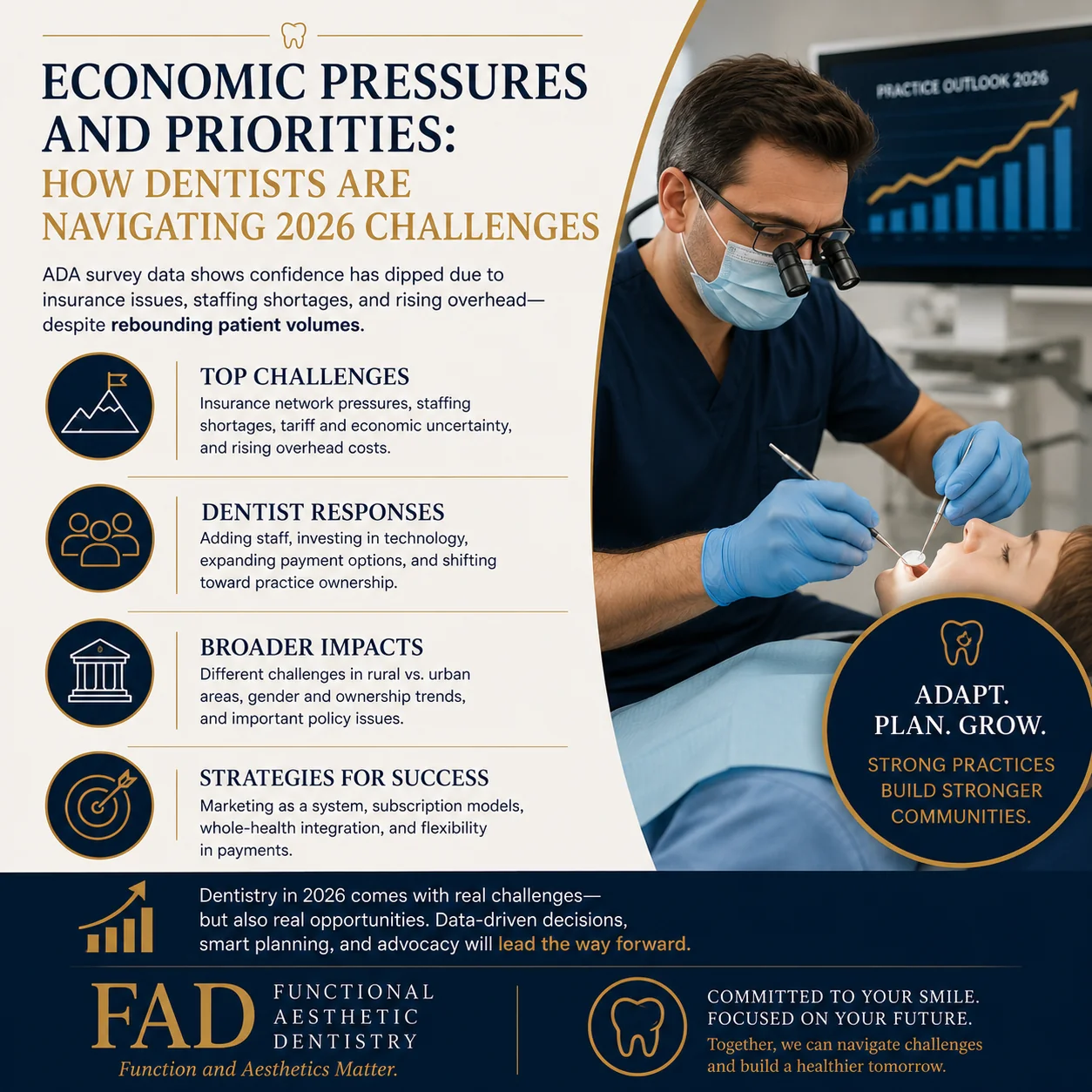
Economic Pressures and Priorities
How Dentists Are Navigating 2026 Challenges
Dentists entered 2026 with tempered optimism. According to the American Dental Association’s (ADA) Health Policy Institute (HPI) quarterly surveys and Economic Outlook report, economic confidence has dipped despite rebounding patient volumes. Insurance issues top the list of concerns, followed closely by persistent staffing shortages and rising overhead costs. Tariffs, broader economic uncertainty, and national policy shifts are adding pressure to practices already navigating post-pandemic realities.
While challenges are significant, many dentists are responding with proactive strategies focused on operational resilience and patient-centered adaptations. This article explores the key pressures and how forward-thinking practices are positioning themselves for success in 2026.
Top Challenges
Insurance concerns dominate 2026 priorities. Many dentists plan to drop or renegotiate participation in networks due to low reimbursement rates, administrative burdens, and delayed payments. This comes as payers push for rate increases amid higher utilization and inflation.
Staffing shortages remain acute, with roughly 90% of practices still struggling to hire and retain talent, even as the pipeline of dental hygienists improves. Rising overhead costs—driven by supplies, technology, rent, and wages—compound the issue.
External economic factors add uncertainty. Tariffs and national economic concerns weigh on dentist confidence, affecting both urban and rural practices. Consumer dental spending has increased in some areas, but fiscal squeezes on practices persist.
Dentist Responses
Practices are taking decisive action. According to ADA data, a significant portion of dentists plan to:
- Add staff to address shortages and support growth.
- Invest in technology, software, and equipment to boost efficiency and reduce long-term costs.
- Re-evaluate insurance networks, with many opting to limit participation or shift toward more favorable arrangements.
- Expand payment flexibility, including in-house financing, membership plans, and third-party options to reduce barriers for patients.
Ownership trends show interesting shifts. Early-career dentists face a delayed path to ownership compared to previous generations, but data indicates most will eventually become practice owners. Generational, cultural, and gender patterns are evolving, with women closing the ownership gap by mid- to late-career.
Broader Impacts
The challenges and responses vary by practice setting. Rural areas often face steeper staffing and access issues, while urban practices deal more intensely with insurance and competitive pressures. Policy developments, such as Dental Loss Ratio (DLR) regulations and changes in Medicare Advantage plans, could significantly influence reimbursement and patient pools.
Broader national forces—including workforce legislation and private equity involvement—are reshaping the profession. These dynamics affect everything from associate compensation to practice sale valuations.
Strategies for Success
Successful practices are adopting multifaceted approaches:
- Treat marketing as a system, not a one-off effort, to attract and retain patients in a competitive market.
- Implement subscription-based or membership models to create predictable revenue and improve patient loyalty.
- Embrace whole-health integration, addressing the oral-systemic health connection and expanding services accordingly.
- Enhance payment flexibility to remove financial barriers and appeal to a wider patient base.
Technology investments—particularly in AI, digital tools, and practice management software—help offset staffing challenges by automating routine tasks.
Optimistic Paths Forward
Despite the pressures, 2026 offers opportunities for adaptable practices. Those that combine smart hiring, strategic technology adoption, diversified revenue streams, and strong patient relationships are well-positioned to thrive.
Advocacy remains crucial. Dentists are encouraged to engage with the ADA and policymakers on issues like insurance reform, workforce expansion, and fair reimbursement. Data-driven decision-making—leveraging HPI reports and internal metrics—will separate resilient practices from those merely surviving.
The dental profession has shown remarkable adaptability in recent years. By focusing on efficiency, patient value, and strategic growth, dentists can navigate 2026’s economic landscape while continuing to deliver high-quality care.
Related Articles:
We look forward to seeing you at your next visit! If you need to schedule an appointment or have a question, give us a call today.