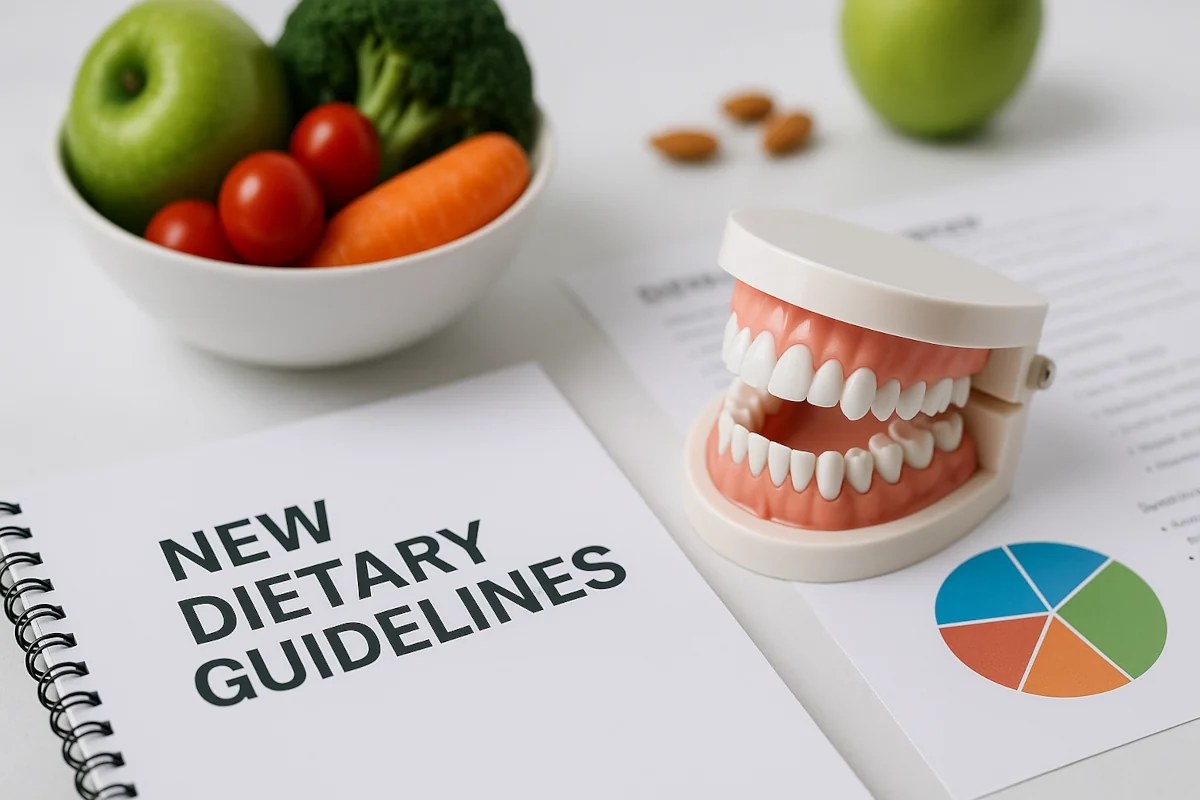
New Dietary Guidelines (ADA 2025-2030 Update)
The U.S. Department of Health and Human Services and the USDA recently released the 2025-2030 Dietary Guidelines, and the American Dental Association is paying close attention. These updated recommendations have significant implications for your oral health, and your family’s smiles.
If you’ve ever wondered how your diet affects your teeth beyond just “don’t eat too much candy,” this update provides clearer answers than ever before. Let’s break down what these new guidelines mean for Las Vegas dental patients and how you can use this information to protect your oral health.
The Big News, No Amount of Added Sugar Is Considered Healthy
Perhaps the most striking change in these guidelines is the stance on added sugars. The new position is clear, no amount of added sugars or non-nutritive sweeteners is recommended or considered part of a healthy or nutritious diet.
This represents a significant shift from previous recommendations. While experts have long advised limiting sugar, this is the first time the guidelines have stated that there’s essentially no “safe” amount when it comes to optimal health.
Here are the practical limits outlined in the new guidelines:
- Added sugars should remain below 10% of your daily calories
- No more than 10 grams of added sugar per meal is recommended
- Children should avoid added sugars until age 10 (increased from the previous recommendation of age 2)
- Sugar-sweetened beverages should be avoided entirely
From a dental perspective, the ADA emphasizes something crucial, the frequency and duration of sugar exposure matters more than the total amount consumed. In other words, sipping on a sugary drink throughout the day is worse for your teeth than consuming the same amount of sugar all at once.

Why Sugar Is Your Teeth’s Worst Enemy
You might be wondering why dentists are so concerned about sugar. Here’s the simple explanation: when you consume sugar, the bacteria in your mouth feed on it and produce acids as a byproduct. These acids attack your tooth enamel, leading to decay over time.
The more frequently you expose your teeth to sugar, the more acid attacks they endure throughout the day. This is why constant snacking on sugary foods or slowly sipping sweetened beverages creates a particularly harmful environment for your teeth.
What many people don’t realize is that any sugar increases the risk for tooth decay, including natural sugars. Yes, even the lactose in milk and the fructose in fruit can contribute to cavities when consumed frequently.
What About 100% Fruit Juice?
The new guidelines specifically address fruit juice, recommending that even 100% fruit juice should be limited or diluted. While fruit juice contains vitamins and nutrients, it also contains natural sugars that can harm your teeth.
For children especially, the ADA recommends:
- Limiting juice consumption to small amounts
- Diluting juice with water when possible
- Encouraging whole fruits instead, which contain fiber that slows sugar absorption
- Never putting juice in a sippy cup or bottle for extended periods
The Shift Away from Low-Fat Diets
Another notable change in the 2025-2030 guidelines is the move away from recommending low-fat diets. For decades, Americans were told to avoid fat whenever possible. The new guidelines take a different approach.
Instead of avoiding fat altogether, the focus is now on choosing the right kinds of fat. The guidelines encourage consumption of whole food fats, including:
- Nuts and seeds
- Olive oil
- Eggs
- Seafood
- Full-fat dairy products
At the same time, the guidelines recommend limiting saturated fat to less than 10% of daily calories. This balanced approach recognizes that healthy fats play important roles in nutrition while still acknowledging that not all fats are created equal.

Processed Foods, A Double Threat to Your Health and Smile
The new dietary guidelines place significant emphasis on avoiding highly processed and ultra-processed foods. These products often contain multiple ingredients that can harm both your overall health and your oral health:
- Added sugars hidden under various names
- Artificial sweeteners that may disrupt oral bacteria balance
- Artificial flavors and dyes
- Preservatives
- Refined carbohydrates that break down into sugars quickly
From a dental standpoint, many processed foods are problematic because they’re designed to be consumed frequently as snacks. Remember, frequent exposure to fermentable carbohydrates creates a greater cavity-causing effect than occasional consumption of larger amounts.
Reading Labels Matters
One practical takeaway from these guidelines is the importance of reading nutrition labels carefully. Added sugars hide under many names, including:
- High fructose corn syrup
- Dextrose
- Maltose
- Sucrose
- Agave nectar
- Brown rice syrup
- Cane juice
If these ingredients appear near the top of an ingredient list, the product likely contains significant amounts of added sugar.
Practical Tips for Las Vegas Families
Understanding the guidelines is one thing: putting them into practice is another. Here are some simple, actionable tips to help protect your family’s oral health based on these updated recommendations:
At Home
- Stock your kitchen with whole foods like fresh vegetables, fruits, nuts, and proteins
- Replace sugary drinks with fluoridated water: drinking fluoridated water is a proven strategy for maintaining good oral health
- Limit snacking between meals to reduce the frequency of acid attacks on teeth
- Choose whole fruits over fruit juice whenever possible
- Read labels carefully and avoid products with added sugars in the first few ingredients
When Eating Out
- Request water instead of soda or sweetened beverages
- Choose dishes made with whole ingredients rather than processed options
- Be mindful of sauces and dressings, which often contain hidden sugars
- Consider sharing desserts to reduce sugar consumption
For Children
- Delay introducing added sugars as long as possible (the guidelines now recommend until age 10)
- Model healthy eating habits: children learn from watching adults
- Make water the default beverage at home and on the go
- Offer vegetables and whole foods as snacks instead of packaged snacks

How These Guidelines Impact Community Health Programs
The 2025-2030 Dietary Guidelines don’t just affect individual choices, they influence food programs across the country. These programs often serve populations most at risk for dental problems, including children and low-income families.
As these guidelines are implemented in school lunch programs, WIC (Women, Infants, and Children) programs, and other food assistance initiatives, we may see positive changes in the oral health of vulnerable populations over time.
For Las Vegas families who participate in these programs, this could mean access to healthier options that support both overall nutrition and dental health.
The Connection Between Diet and Overall Oral Health
It’s worth remembering that diet affects more than just cavities. Your eating patterns play a critical role in maintaining healthy gums as well. Poor nutrition can contribute to gum disease, which has been linked to other serious health conditions.
By following these updated guidelines: particularly reducing added sugar consumption and increasing whole food intake: you’re supporting both your dental health and your overall wellbeing. If you’re curious about how oral health connects to other health conditions, our article on oral health and serious health problems explores this topic in more detail.
What This Means for Your Next Dental Visit
These dietary guidelines give you and your dental team a shared framework for discussing nutrition and oral health. During your next visit to Functional Aesthetic Dentistry, don’t hesitate to ask questions about how your eating habits might be affecting your teeth and gums.
We can help you identify potential problem areas and develop practical strategies tailored to your lifestyle. Remember, preventing cavities and gum disease is always easier: and more comfortable: than treating them.
Taking the Next Step
The 2025-2030 Dietary Guidelines provide valuable guidance for protecting your smile through better nutrition. By reducing added sugars, choosing whole foods over processed options, and being mindful of how often you expose your teeth to fermentable carbohydrates, you can significantly reduce your risk of tooth decay.
Small changes add up over time. Start with one or two adjustments, maybe switching from soda to water or reading labels more carefully: and build from there. Your teeth will thank you.
If you have questions about how these guidelines apply to your specific situation, or if it’s time for your next checkup, the team at Functional Aesthetic Dentistry is here to help. Together, we can create a plan that supports your healthiest smile for years to come.